
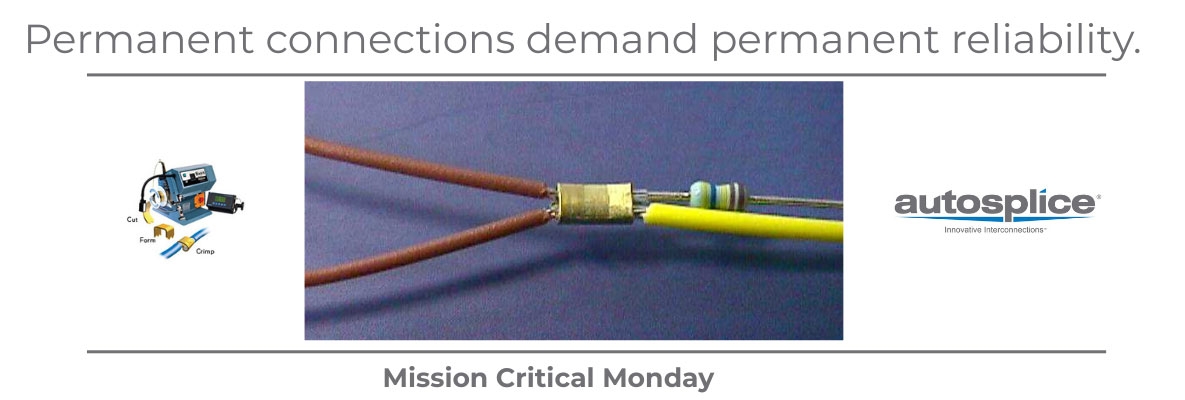
Permanent Splice Solutions for High-Reliability Wire Harnesses
Splice connections are among the most critical — and least accessible — elements in a wire harness. Once installed, they are typically not inspected, serviced, or monitored, making long-term reliability essential.
Splice technology from Autosplice is engineered to create permanent, gas-tight electrical connections that maintain both mechanical strength and electrical integrity over the life of the harness.
Autosplice splices use insulation displacement and controlled cold-weld principles to form consistent conductor interfaces without stripping insulation or introducing solder variability. This controlled process reduces assembly variation while improving resistance to vibration, thermal cycling, and environmental exposure.
Key Applications
Autosplice splice technology is commonly used in applications where intermittent electrical faults are unacceptable and long-term reliability is required:
- Automotive and EV wire harness systems
- Commercial transportation and rail platforms
- Industrial automation and control systems
- Power distribution assemblies
- Off-highway and heavy equipment
- High-volume electromechanical assemblies
Why Splice Reliability Matters
Unlike connectors, splice failures are often latent — issues may not surface until systems are in operation, where diagnosis and repair can be difficult or impossible. Designing splice reliability into the harness from the start is critical for maintaining system uptime and electrical performance.
Engineering Insight
“Permanent connections demand permanent reliability — splice design and termination process control are foundational to long-term system integrity.”
— Senior Applications Engineer, Wire Harness & Industrial Systems
Design Considerations
When specifying splice technology for mission-critical systems, engineers should evaluate:
- Conductor size and insulation compatibility
- Mechanical stability under vibration and load cycling
- Termination process control and tooling repeatability
- Environmental exposure over the system life cycle
- Accessibility and serviceability limitations after installation
Kensington Perspective
At Kensington, we support mission-critical harness designs by helping engineers evaluate splice technologies with the same rigor applied to connectors, cabling, and system architecture — ensuring reliability is built in, not assumed.